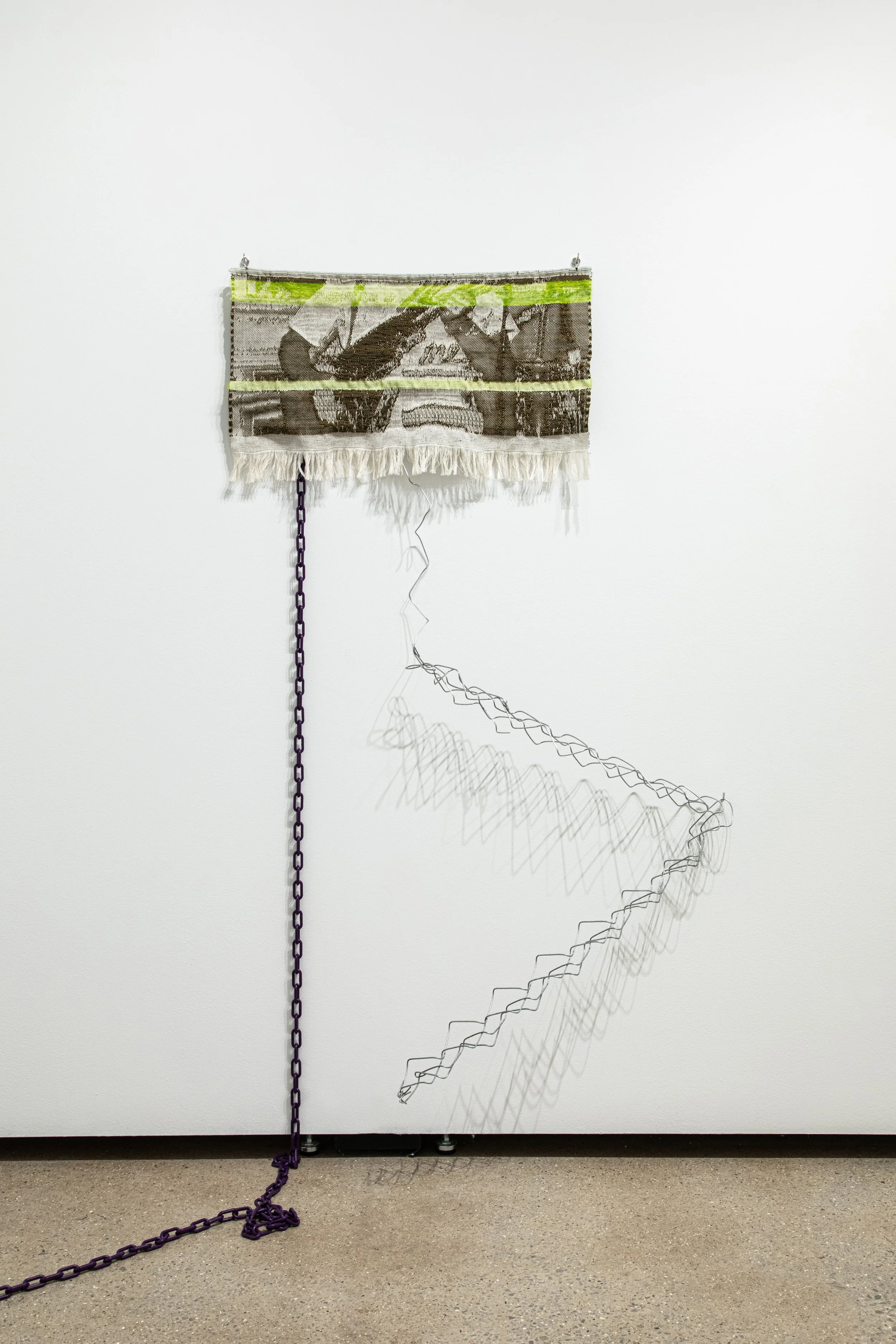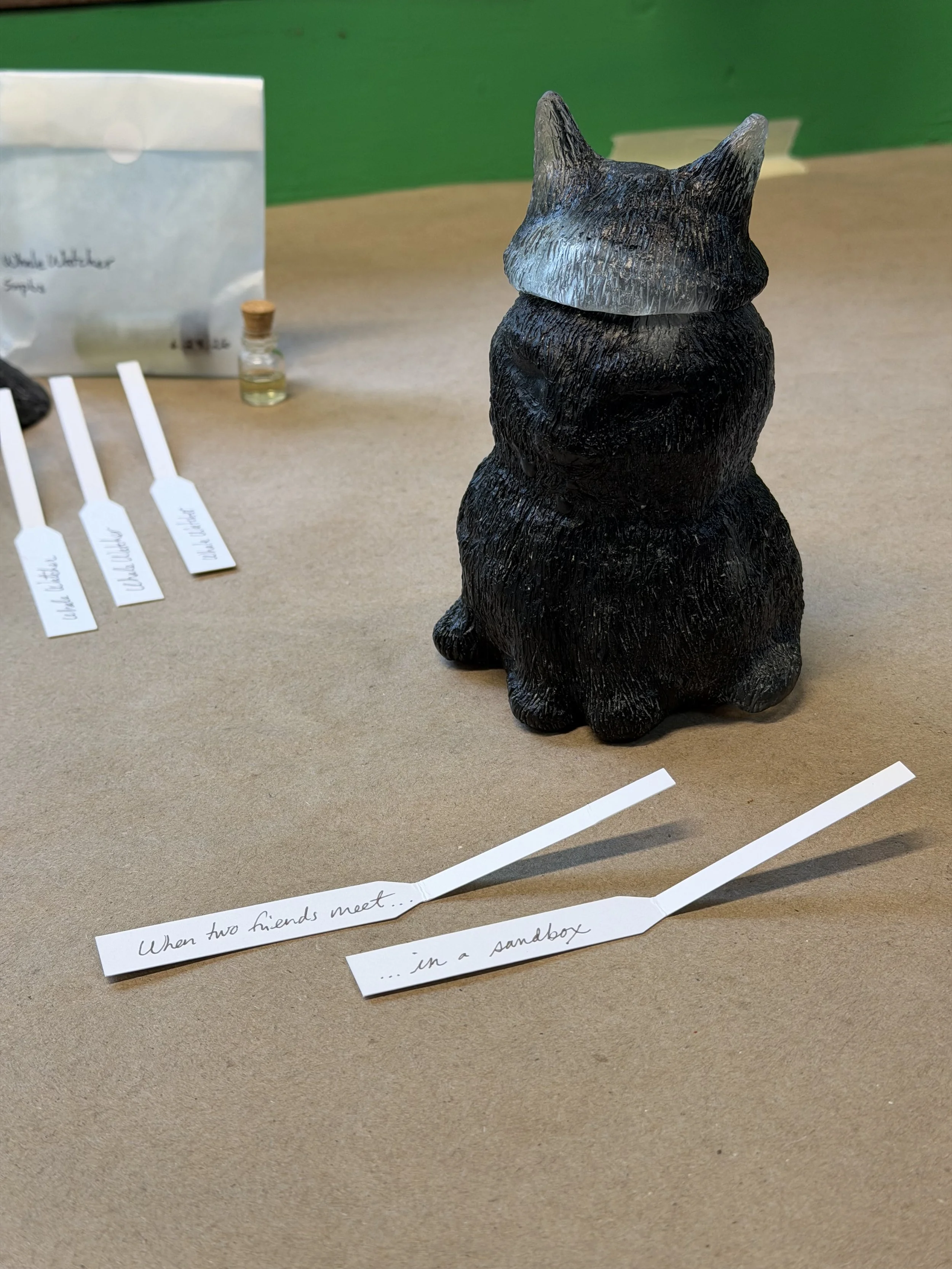
Whale Watcher, 2026
Aroma molecules, glass cast vessel, and scent sticks
Made with the guidance of Emily Endo.
People memorialize many events throughout history, but we often forget to memorialize friendship.
I remember the scents my friends love and hate. One’s affinity with citrus or the other’s distaste for sweet tropical scents. What does the smell of friendship prompt you to produce?
I walked into my Chicago apartment and found it decorated in grad streamers, the smell of cleaning product emanating from a pile of neatly wrapped birthday presents; this is what being loved and cared for felt like. Floored, I opened my presents. I cried. I felt the trauma of the last three months wash off of me as I basked in the love of my dear Cath. I remembered being held by Crecencia in my bathroom; embarrassed to be crying and overwhelmed by her love as she rocked me back and forth until I could breathe again. For a month, Regino and I ritualized smelling throughout Los Angeles. Monica’s long drive from the desert to the city would forever guide my anger. When two friends meet in a sandbox, what kind of path will they decide to carve?
Over a decade ago Crecencia, Sandy, and I talked about whales at the California Science Center. The smell of whales began even then.
Now, the smell of whale watching brings me home. It brings me to a love that carries me daily.
I made “Whale Watcher” for Crecencia; dedicated to her love for salty mist, whales, and the sound of the ocean. A whale call home.
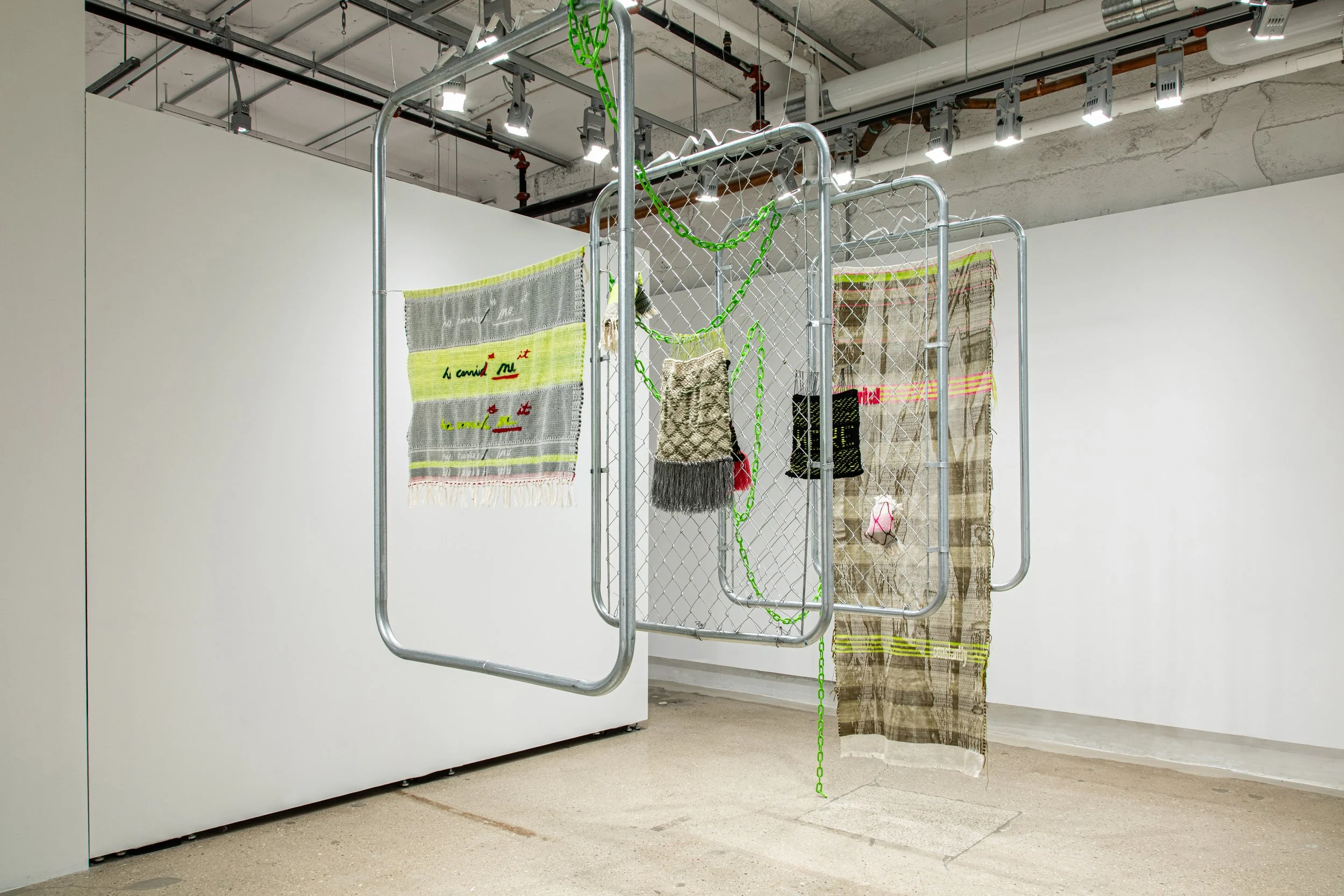
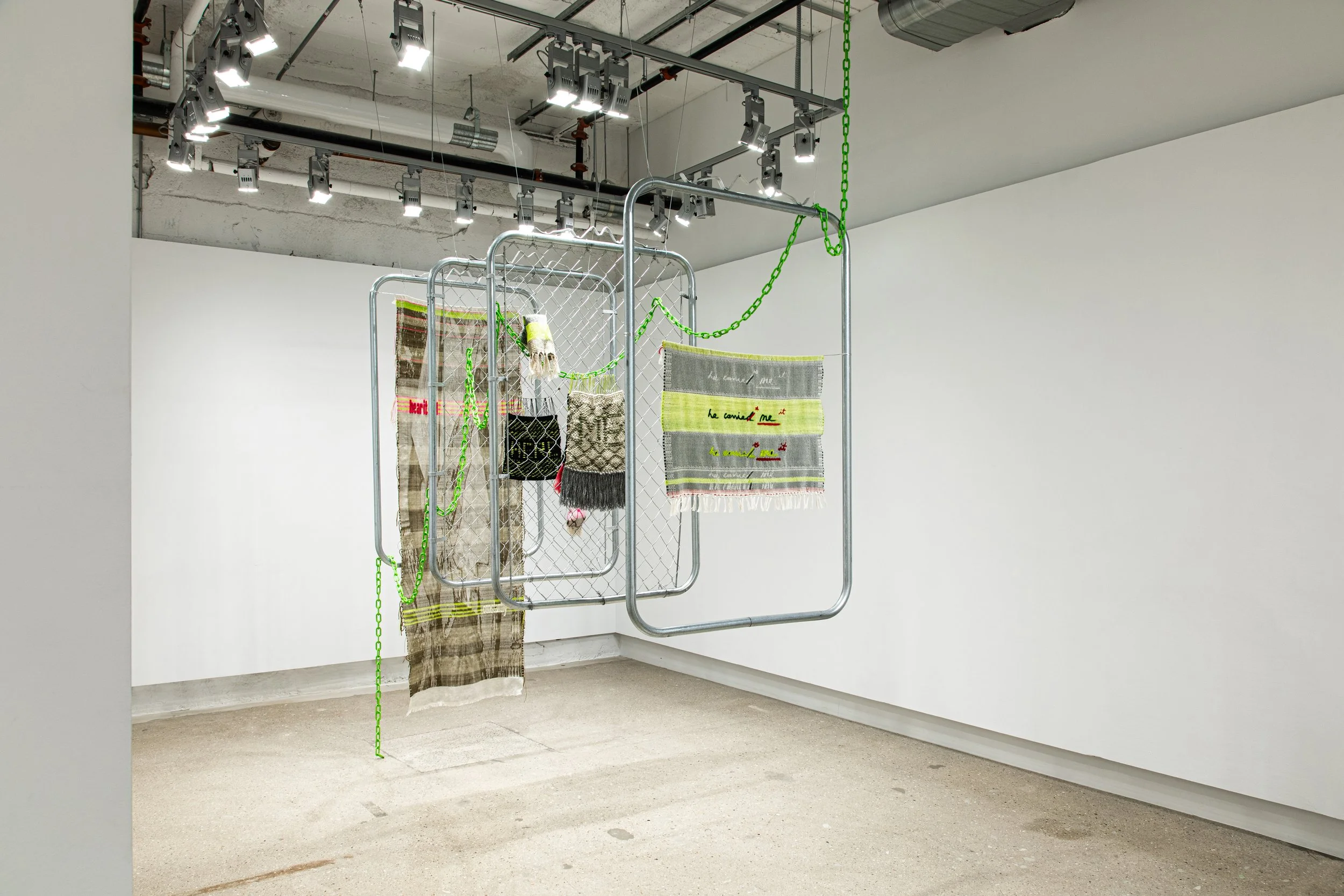
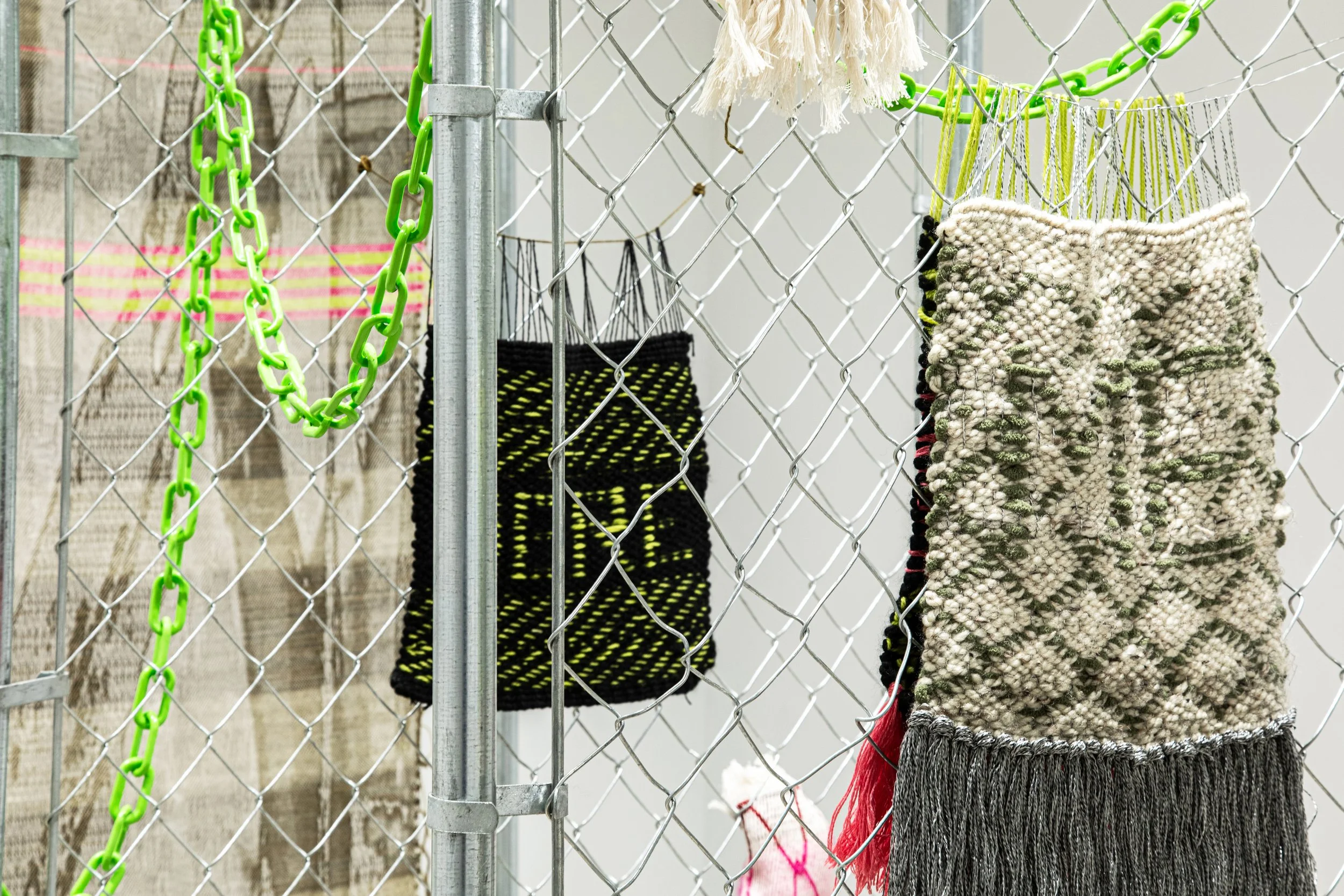
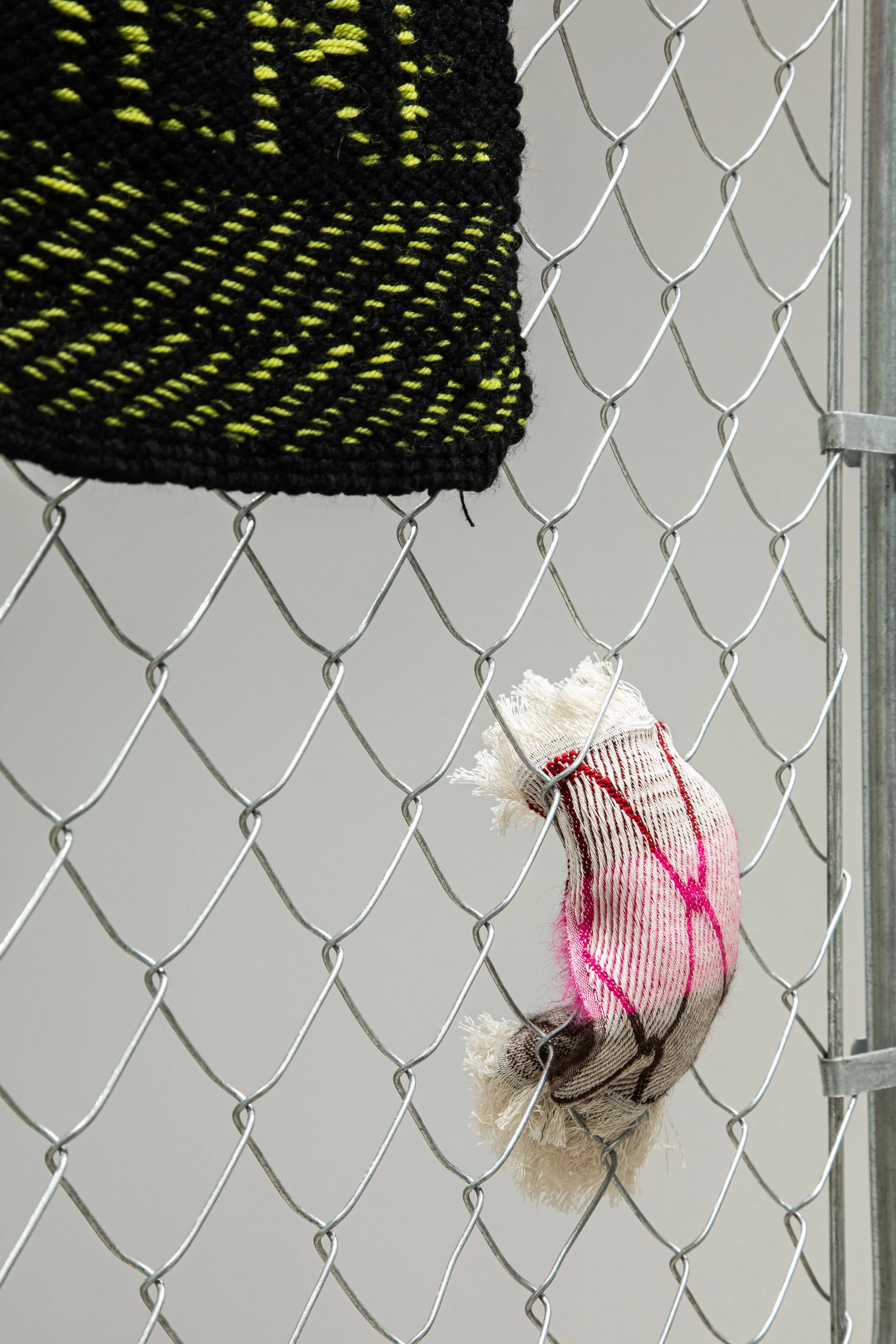
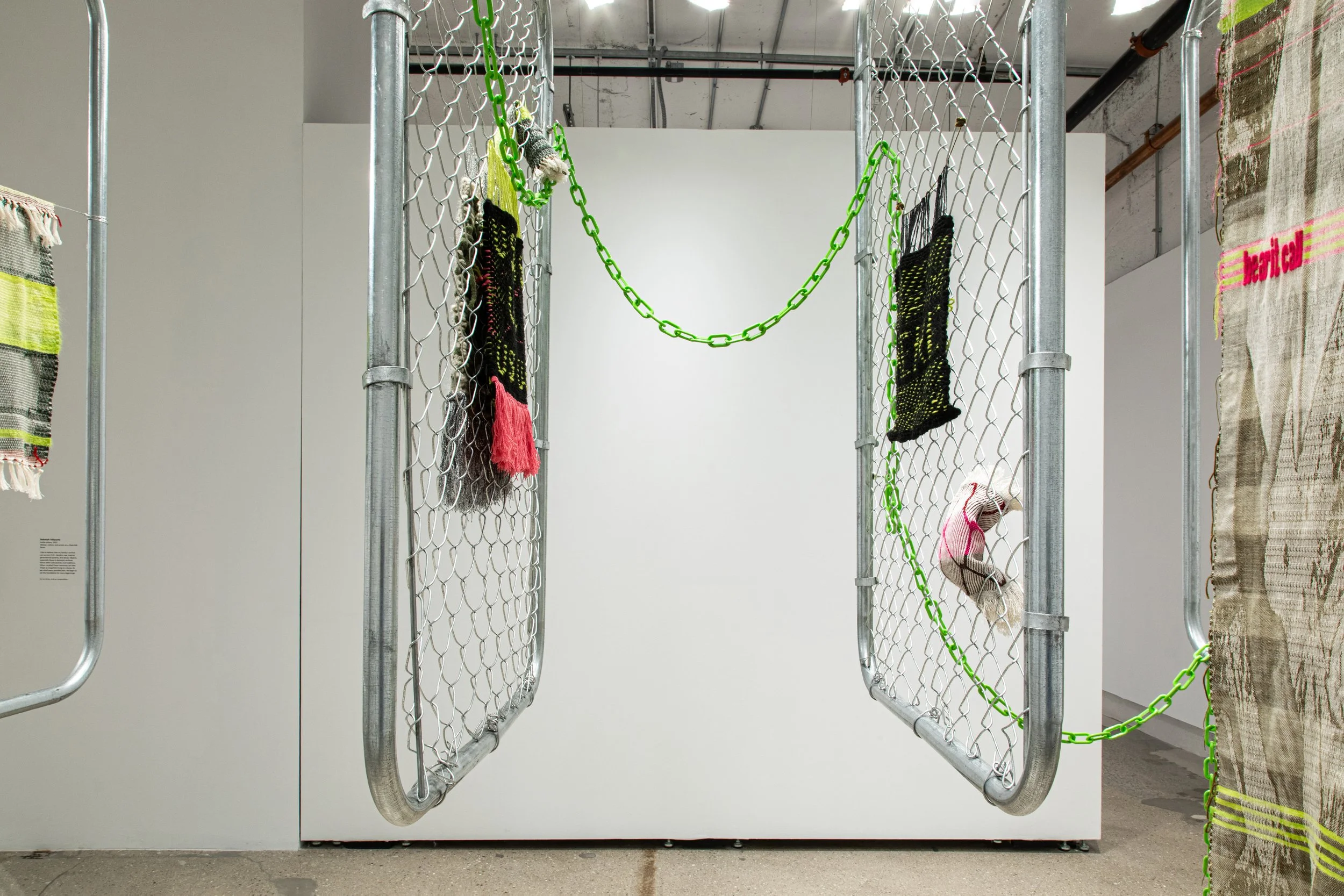
arkhe visions, 2026.
mohair, cotton, plastic chain, and chain-link fence
The objects and stories we collect, hoard, and treasure across migrations and generations become our witnesses. The landscape then looms as a record keeper which waits to unveil their information to anyone who asks. In Los Angeles, skyrocketing housing costs have driven many families to create multi-generational homes. This aggregation of family life into condensed lots has created an architectural landscape of homes that are built proudly; many of these homes display their wealth through the choice of fencing and garden decorations. Lots are divided, treasured, and distributed to the next sibling, cousin, aunt, grandmother, friend who needs it. Plans are made for what next addition will be made to the house. The fence is prioritized. It must be built. It must mark a divider between the street and the home. As the family grows, the fence is what we run to when a new member is added to our families. The family in blood and the chosen one merges. The fence literally becomes the portal for new beginnings. However, we often see the fence as a barrier; one that should not and cannot be crossed. The fence in archiving becomes what we must chase to transform. The fence, the stupid fucking wall, every mental barrier we as Salvadoreños put on our future is what must be undone. We must imagine our archives as an endless gap to fill with our joy. There are so many paths I could take with this project. But weaving softer, malleable, fences felt like home.
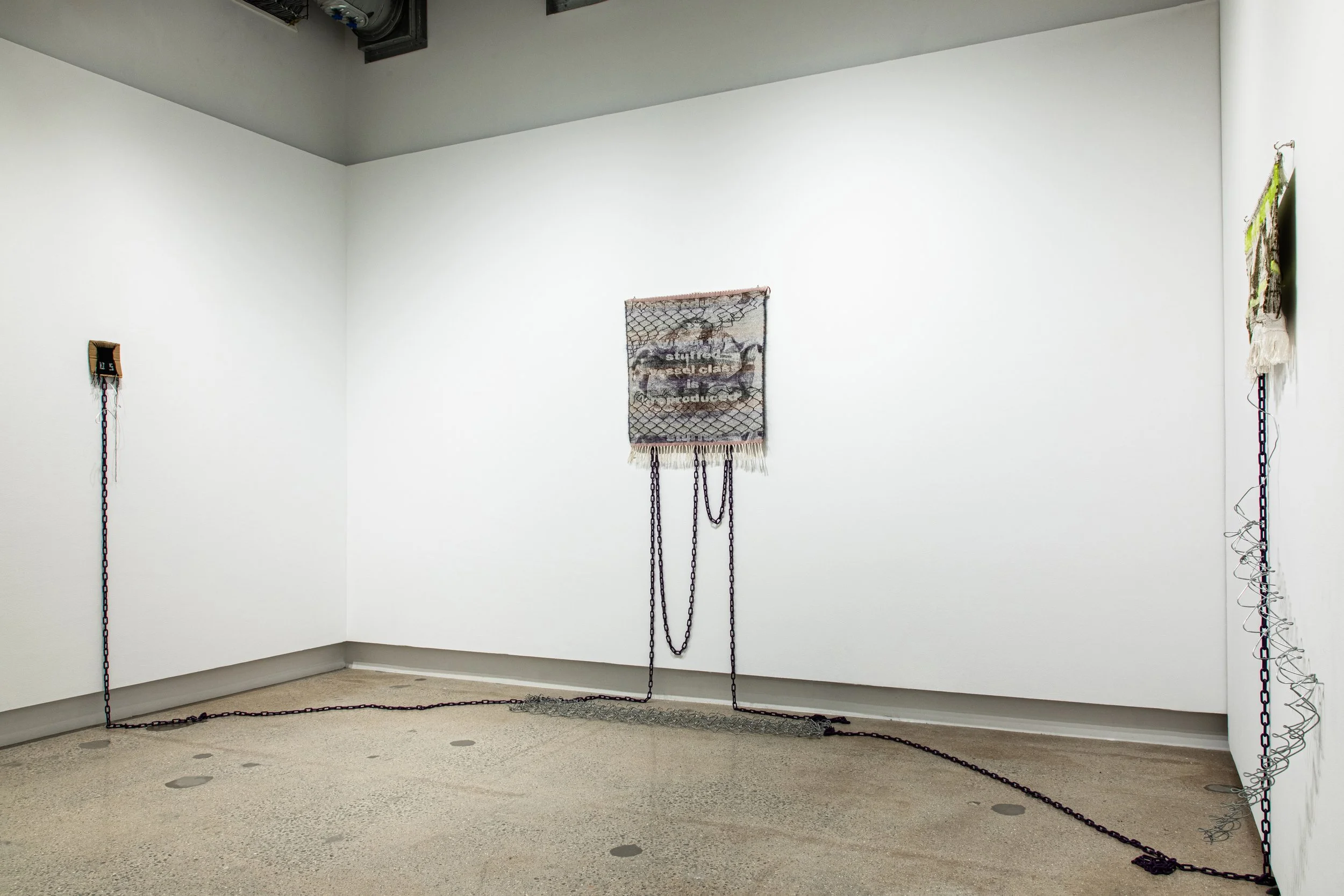
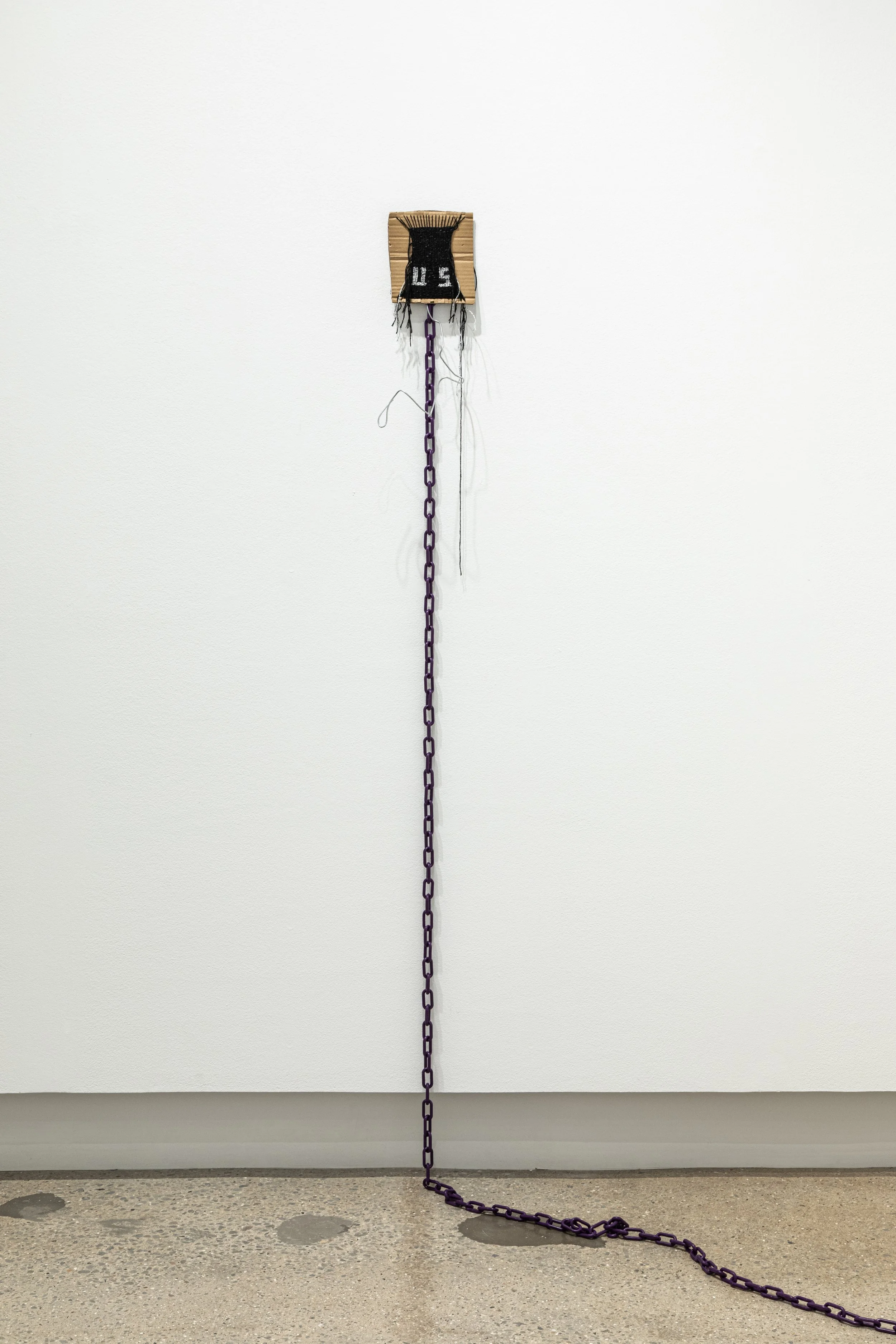
There’s something about unifying pronouns that does not sit right with me, 2025
Cardboard & wool
Tenemos in Spanish, implies that you and I have. You and I own. This convergence of me and us are important in the legibility of this project . A domestic archive confronts the present archivist—in this case me. But it also reckons with the us that led to me. In Rosi Braidotti’s lecture titled, "Posthuman Knowledge & The Critical Post-Humanities" (2025), she addresses the western legacy of narrowing our future to pure panic led by the runaway dialogues of the Anthropocene. Instead, she proposes that the post-human must move away from this western despair and into a becoming of critical interventions that account for other cultures’ approach to futurity and post-humanism. In a domestic archive, tenemos (us and me or you and I) becomes the catalyst for unlocking narratives that have buried themselves deep in a family’s secrets.
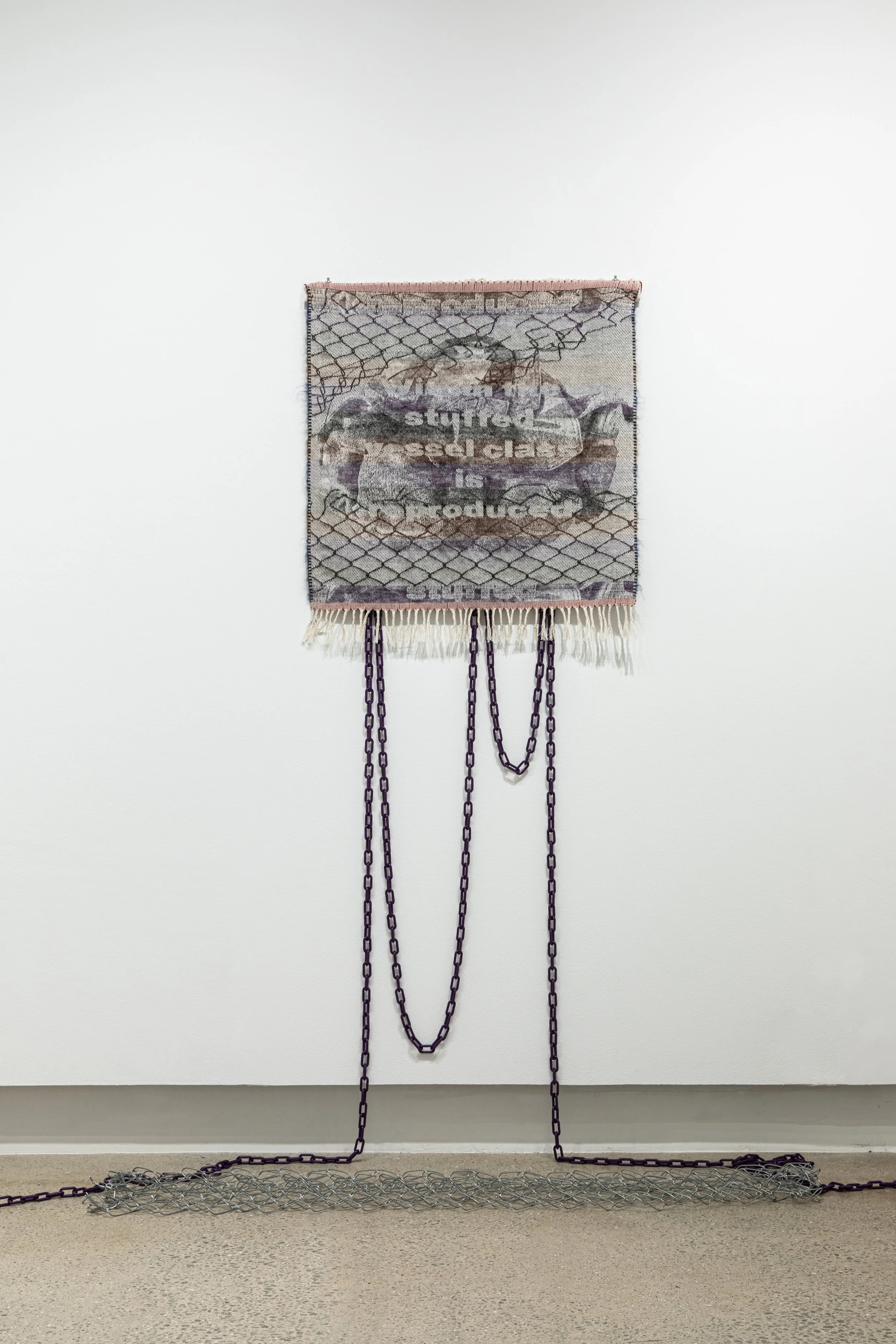
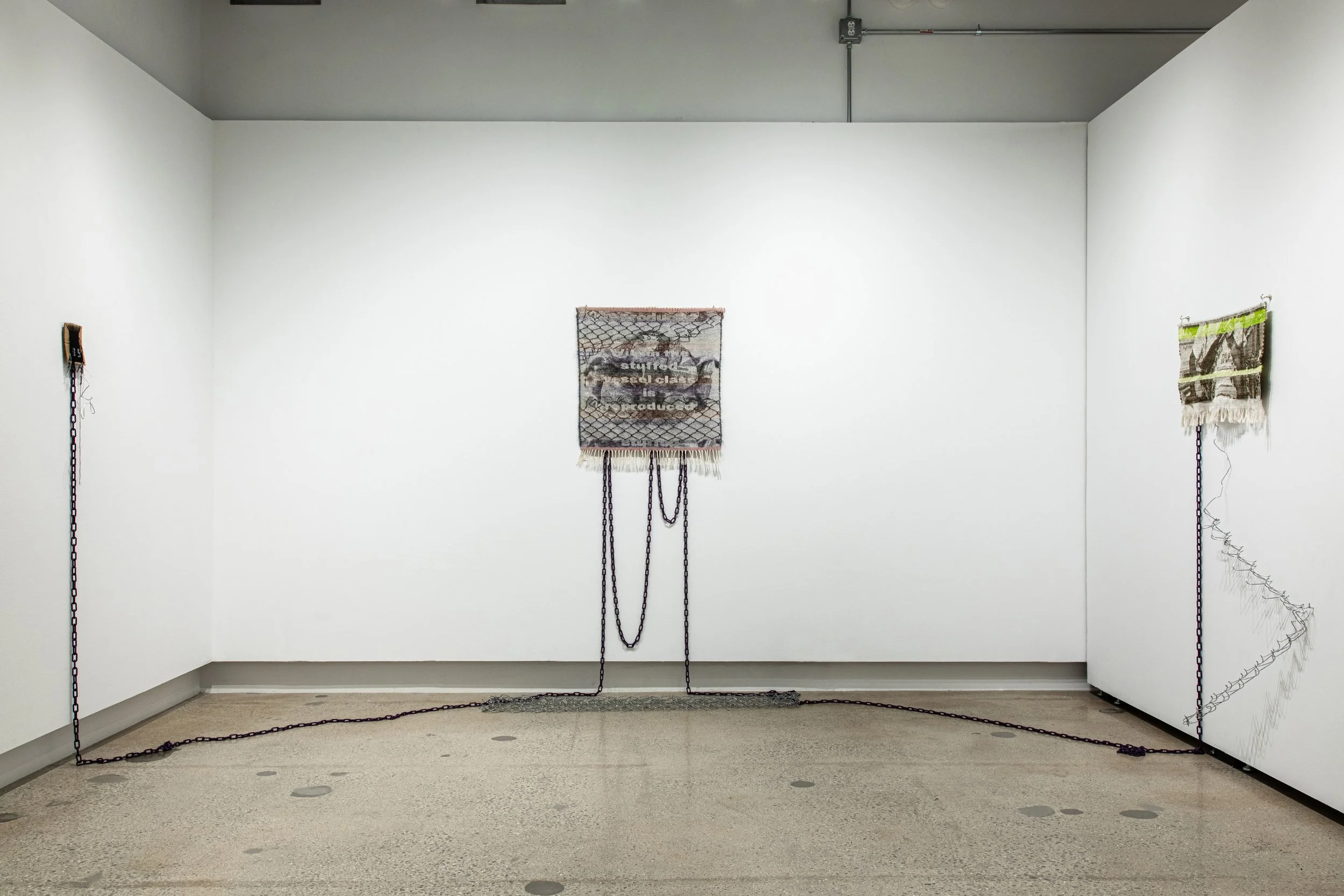
Stuffings, 2026
Jacquard weaving, mohair, cotton, and plastic chain
When I ask my dad about his backpack, he scurries to the furthest corner of the house to dig out a string of letters, IDs, photographs, and stories. Closed, they cease to exist—along with the stories attached to them. This backpack has followed our family for decades. It is our nomadic witness.